How Gutter Cleaning in Hackettstown Helps Prevent Roof Problems
A roof rarely fails all at once. More often, it starts with a small chain of events that looks harmless from the ground. Leaves collect in the gutters. Water stops moving the way it should. The edge of the roof stays wet longer after a storm. In winter, that trapped water freezes. By the time a homeowner notices a stain on the ceiling or a shingle curling near the eaves, the original https://blogfreely.net/rhyannlmoy/best-times-of-year-for-gutter-cleaning-in-hackettstown cause may have been sitting in the gutters for months.
That is why Gutter Cleaning Hackettstown is not just a housekeeping task. It is part of roof protection. In a place like Hackettstown, where homes deal with spring rain, summer thunderstorms, falling leaves, and winter freeze-thaw cycles, clogged gutters create real stress at the roofline. I have seen homes with perfectly decent shingles develop premature trouble simply because runoff had nowhere to go.
People often think of gutters as a separate system, almost an accessory. In practice, the roof, fascia, soffits, flashing, and gutters work together. If one part stops doing its job, the surrounding materials absorb the consequences.
The roof edge is where gutter problems begin to show
When a gutter is clear, water leaves the roof and enters the trough smoothly. It moves toward the downspouts and away from the house. That is the simple, intended path. But when that trough fills with leaves, seed pods, shingle grit, and roof moss, the water backs up.
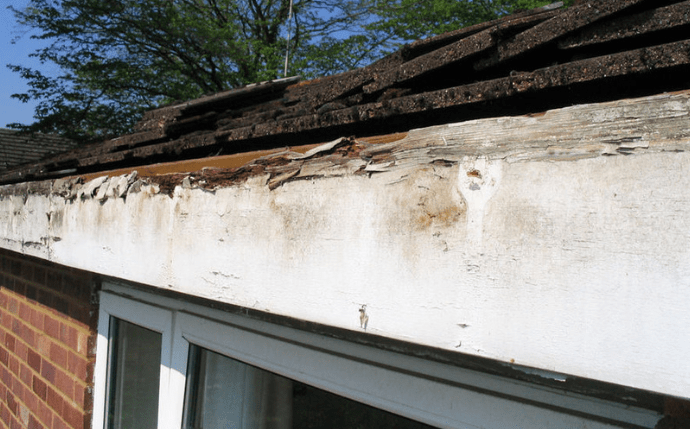
That backup usually starts at the lowest, most vulnerable part of the roofing system, the edge. Water can slip beneath the starter course of shingles or sit against the fascia board. It can soak the wood trim, stain the soffits, and slowly affect the roof decking near the eaves. None of that looks dramatic at first. It often appears as peeling paint, minor discoloration, or a damp section that dries out before anyone gets close enough to inspect it.
Hackettstown homes see a wide range of gutter debris. Mature trees are common in many neighborhoods, and even houses with only a few nearby trees can collect a surprising amount of buildup. Oak leaves mat down tightly. Maple seeds lodge in corners and downspout openings. Pine needles create dense tangles that trap roof granules. Add spring pollen and summer storm debris, and a gutter can go from partially blocked to nearly full faster than many homeowners expect.
A roof does not need standing water for weeks to suffer. Repeated wetting at the same roof edge can be enough to shorten the life of materials that otherwise might have held up well for years.
Overflow is more damaging than it looks
Most people notice clogged gutters because they see water spilling over the side during a storm. That overflow is easy to dismiss. It may look like a temporary nuisance, something to handle when the weather settles down. But overflow tells you that water is no longer being controlled.
When water pours over the front edge, it often misses the downspouts completely and saturates the soil around the foundation. That matters, but it also says something important about the roof. If water is spilling forward, some of it may also be backing up inward, toward the fascia and under the shingles.
I have seen this on homes where the gutter itself looked intact from the ground. No major sagging, no pieces hanging loose, no obvious holes. Yet once the debris was removed, dark staining behind the gutter revealed where water had been repeatedly trapped against the house. In some cases, the fascia wood had softened enough that fasteners were no longer holding properly. At that point, what began as a cleaning issue had become a carpentry repair, and in a few cases, a roofing repair too.
The hidden nature of this damage is what makes routine cleaning so valuable. It catches the problem before moisture has enough time to work its way into wood components and underlayment.
Ice dams often start with poor drainage at the eaves
Winter introduces a different kind of risk. In Hackettstown, freezing temperatures are not unusual, and snow can sit on roofs long enough for ice-related issues to develop. A clogged gutter becomes a cold basin at the roof edge. Meltwater runs off the warmer upper roof, reaches that blocked and freezing edge, and refreezes.
This is one of the ingredients that contributes to ice dams. Once ice forms along the eaves, it can trap additional meltwater behind it. That water may then work its way under shingles and into the roof assembly. Even a modest ice dam can cause leaks, stained ceilings, wet insulation, and interior wall damage.
It is worth saying that not every ice dam is caused by gutters alone. Attic insulation, ventilation, roof slope, and outdoor temperature swings all play a role. But blocked gutters make conditions worse. They reduce drainage right where winter roofs need it most.
The homes most vulnerable are often the ones people do not suspect. Older homes with character details, additions with lower rooflines, and sections shaded by trees can all behave differently during freeze-thaw cycles. One side of the house may remain fine while another side develops thick ice at the gutter line. That uneven behavior is common, especially where sun exposure changes across the day.
Keeping gutters clear before cold weather arrives does not eliminate every winter roofing problem, but it removes a major trigger.
Heavy gutters can pull on the roofline
Debris does more than block water. It adds weight. Wet leaves are especially dense, and when they sit in a long run of gutter after repeated storms, they create substantial strain on hangers, spikes, and fascia boards.
A gutter that is overloaded may begin to sag. Once its pitch changes, even a little, water stops draining properly and starts pooling in sections that should remain relatively dry between storms. That standing water increases weight further, which can accelerate the sagging. It becomes a self-reinforcing problem.
The roofline suffers because gutters are mounted directly to the house. If fasteners loosen and wood behind them has started to rot, the pulling force can damage trim and expose areas near the lower edge of the roofing system. In more severe cases, a section of gutter can detach during a storm or under snow load, tearing away material as it falls.
This is another reason Gutter Cleaning Hackettstown should be viewed as preventative maintenance, not cosmetic upkeep. The point is not just to make the gutters look clean. The point is to keep the drainage system light, functional, and properly aligned so it does not stress the roof edge.
Small roof leaks often begin at transition points
Some roof leaks come from obvious failures, missing shingles after a wind event, damaged flashing around a chimney, or old pipe boots. But many slow leaks show up at transition points where water lingers longer than it should. The gutter line is one of those points.
Water that backs up at the eaves can affect drip edge flashing. It can seep around nail penetrations near the edge of the roof. It can infiltrate where underlayment has aged or where previous repairs were not especially neat. Once moisture gets into the decking, the symptoms may appear far from the original entry point. A homeowner sees a stain on the ceiling and assumes the leak is directly above it. Sometimes it is not. Water can travel along framing or the underside of decking before finally showing itself indoors.
That is part of what makes roof diagnostics tricky. And it is why routine gutter cleaning pays off. It removes one of the most common reasons water behaves unpredictably at the edge of the roof.
On a practical level, clean gutters also make roof inspections more accurate. When the gutter trough is packed with debris, it is harder to see whether shingle granules are accumulating excessively, whether joints are separating, or whether runoff patterns suggest a deeper issue. A clear system tells a clearer story.
The local climate in Hackettstown makes timing matter
Not every region puts the same kind of stress on gutters. Hackettstown’s seasonal pattern is a major factor in why cleaning matters for roof health. A dry climate with minimal tree cover creates a different maintenance schedule than a town that gets regular rain, leaf drop, and winter weather.
In this area, the timing of gutter service matters nearly as much as the service itself. A gutter cleaned in early summer may still need attention after fall leaf drop. A house with overhanging trees may need more than one cleaning in a season. A roof valley that dumps runoff into one concentrated gutter section can clog faster than the rest of the system, even if the rest looks fairly clear.
The homes that need the most vigilance are not always the largest or oldest. A one-story ranch under mature trees can need more frequent service than a taller home with a cleaner perimeter. Roof design also matters. Intersecting roof planes, dormers, and inside corners tend to funnel debris and runoff into specific trouble spots.
These are the kinds of details that get lost when people think of gutters as a once-a-year task. In reality, the right schedule depends on the site, the tree cover, the roof layout, and how the house behaves during actual storms.
Signs that clogged gutters may already be affecting the roof
Homeowners often ask what they should look for before calling for service or an inspection. A few signs show up repeatedly when gutter problems have started to affect the roofline:
- water spilling over the gutter edges during ordinary rain
- dark streaks or peeling paint on the fascia or soffits
- icicles and ice buildup concentrated along the eaves
- plant growth in the gutters or visible debris mounds at downspout openings
- damp attic insulation or ceiling stains near exterior walls
Any one of these signs is worth attention. Two or three together usually mean the problem has been developing for a while. The sooner it is addressed, the better the odds that the roof itself has avoided serious damage.
Cleaning does more than remove debris
There is a difference between simply scooping out leaves and doing a thorough gutter cleaning. A proper service typically includes clearing the troughs, opening the downspouts, checking water flow, and noting problem areas such as loose hangers, improper pitch, separated joints, or signs of rot at the fascia.
That inspection value is often overlooked. Roof problems do not always announce themselves. Sometimes the first clue is a section of gutter that stays wet when the rest is dry, or a seam that leaks only when runoff is heavy. A person who works around gutters regularly can spot those patterns early.
For example, if one downspout keeps clogging with shingle grit, that may suggest a section of roofing is wearing faster than expected. If one gutter run is repeatedly filling with debris despite regular cleaning, it may indicate that nearby branches need trimming or that a roof valley is concentrating more material there than the system can handle efficiently. Those details matter because they connect routine maintenance to bigger structural outcomes.
A good cleaning also confirms whether the system can actually handle the water coming off the roof. Some homes have undersized downspouts or awkward drainage paths that were never ideal to begin with. Cleaning exposes those weaknesses. It does not always mean an upgrade is necessary, but it gives the homeowner real information instead of guesswork.
The cost trade-off is usually straightforward
No homeowner enjoys adding another maintenance item to the calendar. It is reasonable to ask whether routine gutter cleaning is worth the expense, especially if the gutters do not look terrible from the yard. From a roof protection standpoint, the math is usually simple.
Cleaning is modest compared with repairing roof decking, fascia replacement, interior drywall damage, or mold remediation from a leak that could have been prevented. Even a minor roof edge repair can cost far more than periodic maintenance. Once water gets into wood, insulation, or finished interior spaces, costs rise quickly.
There are also indirect costs. A hidden leak can reduce insulation performance. Persistent moisture can stain siding and masonry. Overflow near entrances can create slippery walkways in winter. None of these problems starts as a catastrophic event. They build gradually from unmanaged drainage.
That does not mean every home needs the same level of service. A homeowner with minimal tree cover and a straightforward roofline may only need seasonal attention. Another home tucked beneath heavy canopy may need more frequent visits. The point is not to over-service the property. The point is to match maintenance to actual risk.
When gutter guards help, and when they do not solve enough
Gutter guards come up in almost every conversation about maintenance, and they can be useful. On some homes, they reduce the volume of debris entering the gutters and extend the time between cleanings. That can be especially helpful where leaf load is moderate and the roof design is simple.
But guards are not a cure-all. Fine debris still gets through many systems. Pine needles can collect on top. Seeds can germinate in corners. In some cases, poorly fitted guards cause runoff to overshoot the gutter during heavy rain. I have also seen guards conceal a blockage until water had already begun backing up under the shingles.
The best way to think about guards is as a maintenance reduction tool, not a maintenance elimination tool. They may make sense, but they still require inspection, especially after storms and before winter. If a homeowner installs guards and assumes the gutter system no longer needs attention, roof risk can quietly return.
Professional cleaning versus doing it yourself
Some homeowners are comfortable cleaning their own gutters, particularly on single-story homes with good ladder access. If the roofline is simple and safety conditions are solid, that can work. But many houses in Hackettstown present challenges that make professional service the better option, steep grades, uneven ground, second-story sections, power lines, enclosed areas over porches, or heavy seasonal buildup that turns the work from a quick chore into a demanding job.
There is also the matter of what gets noticed during the process. A professional is more likely to recognize the early signs of roof edge trouble, small separations, rusting brackets, drip edge issues, or overflow patterns that suggest a design problem rather than a simple clog.
For homeowners evaluating the choice, the practical questions are pretty straightforward:
- Is the roofline safely accessible?
- Are there signs of sagging, rot, or overflow that need a closer look?
- Does the property have enough tree cover to require more frequent maintenance?
- Are winter ice issues already showing up at the eaves?
- Would a professional inspection likely catch problems earlier than a basic cleanup?
If those answers point toward higher risk, professional service is usually money well spent.
A maintenance habit that protects much more than gutters
The most expensive roof problems are often the ones that spent a long time developing unnoticed. Gutters play a larger role in that story than many homeowners realize. They control how quickly water leaves the roof, how dry the eaves remain between storms, and how much stress the fascia and roof decking must absorb through the year.
In Hackettstown, with its mix of rain, leaf debris, snow, and freeze-thaw weather, neglected gutters can create exactly the conditions that lead to roof trouble. Backed-up water, ice formation, overflow, extra weight, and prolonged dampness at the roof edge all shorten the life of materials that should have lasted longer.
That is why Gutter Cleaning Hackettstown deserves to be treated as roof maintenance. It is not a side task and not an afterthought. It is one of the simplest ways to protect shingles, flashing, wood trim, attic insulation, and the interior spaces below. A clean gutter system will not solve every roofing issue, but it prevents a surprising number of them from ever getting started.
Just Gutters LLC
Address: 262 Main St, Hackettstown, NJ 07840
Phone number: +12013319454
FAQ About Gutter Cleaning Hackettstown
How much should a gutter clean cost?
Professional gutter cleaning typically costs between $163 and $333, with a national average of around $210 to $250 for a standard-sized home.
What months should you clean gutters?
You should clean your gutters twice a year—once in late autumn (November to December) and once in late spring (April to May).
Is it worth paying for gutter cleaning?
Yes, paying for gutter cleaning is worth it because it prevents thousands of dollars in water damage, roof leaks, and structural repairs.